Our Programs
Explore our specialized gymnastics training programs designed for all skill levels.
Qatar Olympic Program
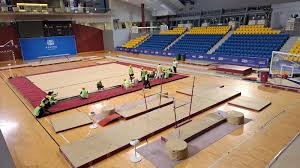
Qatar’s gymnastics Olympic program is a structured, long-term initiative driven by the Qatar Gymnastics Federation (QGF) and the Qatar Olympic Committee (QOC). It focuses on identifying talent at a young age and providing world-class training to prepare athletes for international competition, specifically targeting the Los Angeles 2028 Olympics and beyond.
The program is built on four main pillars:
1. The School Olympic Program (SOP)
This is the grassroots foundation of Qatari gymnastics. It is a national initiative that integrates sports into the school curriculum to identify gifted children early. The SOP serves as a "feeder" system, where top-performing students are scouted by national federations and the Aspire Academy for elite training pathways.
The program is built on four main pillars:
1. The School Olympic Program (SOP)
This is the grassroots foundation of Qatari gymnastics. It is a national initiative that integrates sports into the school curriculum to identify gifted children early. The SOP serves as a "feeder" system, where top-performing students are scouted by national federations and the Aspire Academy for elite training pathways.
USAG Program (USAG Levels)
The USA Gymnastics (USAG) Women’s Development Program begins with Levels 1 through 5, which are classified as Compulsory levels. This means every gymnast performs the exact same routine and music, ensuring they develop a standardized foundation of form and technique.
Levels 1 & 2: These are introductory stages focusing on basic coordination and fundamental positions. Gymnasts learn the "building blocks," such as handstands, cartwheels, and basic swings on bars. Many gyms use these levels for internal competition or to prepare young athletes for the rigors of formal scoring.
Level 3: Often considered the first "serious" competitive level, it introduces more power-based skills like the front handstrip on vault and the back handspring on floor. It requires a higher degree of precision and body tightness.
Levels 4 & 5: These levels represent a significant jump in difficulty. Level 4 requires a "kip" on bars, which is a major milestone in a gymnast’s career. Level 5 increases the complexity further, demanding clear hip circles and more advanced tumbling passes, serving as the final bridge before moving into the Optional levels (6–10), where gymnasts can finally perform unique, personalized routines.
Levels 1 & 2: These are introductory stages focusing on basic coordination and fundamental positions. Gymnasts learn the "building blocks," such as handstands, cartwheels, and basic swings on bars. Many gyms use these levels for internal competition or to prepare young athletes for the rigors of formal scoring.
Level 3: Often considered the first "serious" competitive level, it introduces more power-based skills like the front handstrip on vault and the back handspring on floor. It requires a higher degree of precision and body tightness.
Levels 4 & 5: These levels represent a significant jump in difficulty. Level 4 requires a "kip" on bars, which is a major milestone in a gymnast’s career. Level 5 increases the complexity further, demanding clear hip circles and more advanced tumbling passes, serving as the final bridge before moving into the Optional levels (6–10), where gymnasts can finally perform unique, personalized routines.